Topic - The Human Cost of Tailings Dam Failures: Lessons from the Past, Implications for the Future
Background
Tailings dam failures have devastating consequences for communities, causing loss of life, displacement, and long-term environmental damage. This panel discussion will bring together experts, community leaders, and government representatives to examine the human impact of tailings dam failures, highlighting lessons from past incidents and implications for the future.
The discussion will explore the human cost of tailings dam failures, including community displacements, health effects, and economic losses. Panelists will share case studies of past tailings dam failures and discuss the short-term and long-term consequences for affected communities. The discussion will also examine the role of industry, government, and regulatory bodies in preventing tailings dam failures and mitigating their impacts.
Key topics to be discussed include the human rights implications of tailings dam failures, the importance of community engagement and participation in tailings dam management, and the need for stronger regulations and enforcement mechanisms to prevent such disasters.
Key Questions:
- What are the human costs of tailings dam failures, and how can they be mitigated?
- What are the lessons from past tailings dam failures, and how can they inform future policy and practice?
- What are the implications of tailings dam failures for the future of the mining industry, and how can companies and governments work together to prevent such disasters?
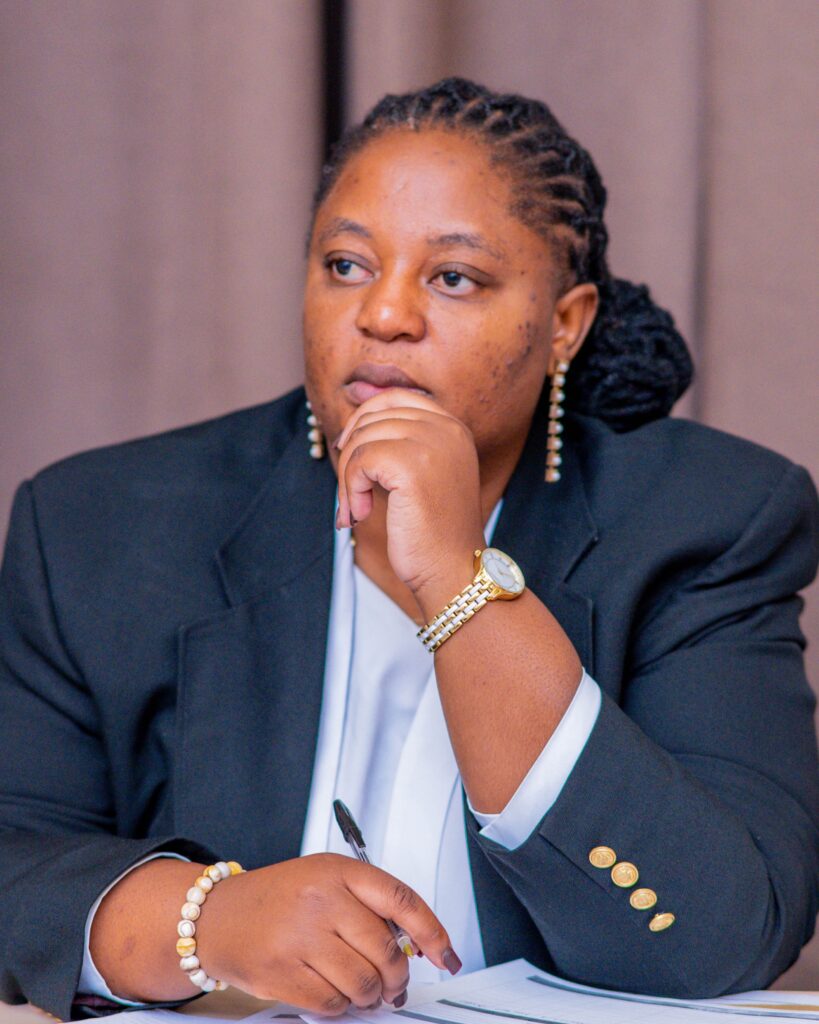
Jennifer Mwanangombe, Centre for Environment Justice (CEJ)
Website: https://cejzambia.org/
Jennifer Mwanangombe is the Head of Programmes at the Centre for Environment Justice (CEJ), where she oversees environmental protection and extractive industry initiatives, advocates for community rights, engages stakeholders, and advances sustainable resource management and environmental justice. An environmentalist by profession with over four years of experience in the sector, she brings skills in community and stakeholder engagement, advocacy, research and report writing, and event planning and facilitation. She holds a BSc in Environmental Education and Management and has professional training in environmental governance and natural resource management.

Ucizi Ngulube, Greenpeace Africa
Website Link: https://www.greenpeace.org/africa/en/
Ucizi Ngulube is a development economist and Socio-Environmental & Tax Justice Campaigner at Greenpeace Africa, working at the intersection of climate action, economic justice, tax policy and sustainable development to advance public finance policies that support a just transition, strengthen public services and tackle climate-related inequalities. Previously at ActionAid Zambia, he coordinated the TaxEd Alliance and led advocacy on progressive taxation, education financing and accountable public spending, while contributing to research on public debt, illicit financial flows, gender-responsive services and international tax cooperation, including global financing-for-development processes and the UN tax convention. Holding a BA in Economics and pursuing a Master’s in Public Finance and Taxation, he collaborates with civil society, government and parliamentarians to promote accountability, equity and sustainable development across Africa.

Zambia Disaster Management and Mitigation Unit (DMMU)
Website: https://www.ovp.gov.zm/?page_id=6756
Panelist: Likezo Musobani
The Zambia Disaster Management and Mitigation Unit is the national institution responsible for coordinating disaster preparedness, response, and mitigation efforts across Zambia. It works to assess disaster risks such as floods, droughts, and environmental hazards, and develop strategies to reduce vulnerability and build resilience. The DMMU partners with government agencies, local authorities and communities to implement early warning systems, disaster risk reduction programs, and emergency response plans. Its mission is to safeguard lives, property and livelihoods by enhancing Zambia’s capacity to anticipate, respond to and recover from disasters and crises.

Kalima Kunda - Conservation Advocates Zambia (CAZ)
Kalima Kunda is a qualified Project Manager and Environmentalist with an MSc in Project Management from the University of Lusaka, a BSc in Environment and Natural Resources Management from the University of Zambia, and certificates in Monitoring and Evaluation and SPSS. With over eight years of experience in monitoring and results measurement, logical framework design, project and quality management, research, and environmental management, including Environmental Project Briefs, Impact Assessments, and solid waste management, he has successfully coordinated projects nationwide, most recently supporting the design of a 2024 Miombo forest conservation initiative funded by the World Bank and implemented by the Ministry of Green Economy and Environment. He previously delivered the Contractor Environmental and Social Management Plan for the Millennium Challenge Account Jack Water Reticulation Project in Lusaka (2018), integrating gender mainstreaming, local employment, waste management, and sanitation, while skillfully engaging private-sector, government, and traditional stakeholders. He currently consults for Conservation Advocates Zambia (CAZ), a civil society organisation advocating for sound environmental policies and justice for communities affected by mining.
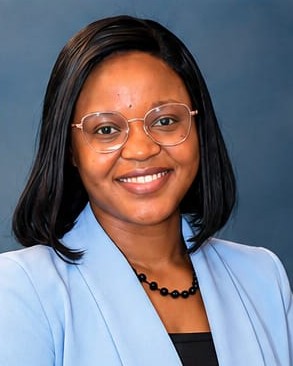
Moderator: Gift Nyambe, Transparency International Zambia (TIZ)
Website: https://tizambia.org.zm/
Gift Nyambe is a Zambian development and governance professional with experience in civic engagement, accountable governance, political integrity, human rights, environmental justice, and community development. She currently serves as a Project Officer on the LIFT Zambia Programme, where she supports initiatives that promote community resilience, environmental justice, extractive sector governance and strengthening active citizenship and accountable governance.
Through her work, Gift has contributed to research and advocacy on responsible mining and human rights, with a focus on the experiences of mining affected communities, access to information community participation, environmental accountability and grievance redress mechanisms. She holds a Master’s degree in Development Studies and a degree in Civic Education and Curriculum Studies.Her interests include civic education, governance, social accountability, citizen participation, and inclusive development.